For the 28D, 28DD/E, & 28DDD/F Girlies!
This is for all the petite-ribcage, full-busted girls who have a hard time finding the right bra for their needs. It is hard to find a 28 band size, especially since most people have not heard of such a small band size. It's even more of a shock when you have a 28 band size paired with a D, DD/E, or DDD/F cup, because everyone assumes fuller cups mean a bigger band. That's not the case, and it's the exact same story as a small band with a small bust, just from the other lens: a small band and a large bust is a real, distinct proportion, not a contradiction.
Why She Keeps Getting Put in a 32 Instead of a 28
A 28D is a 28-inch band with a 32-inch bust, a 4-inch difference. That's the math, in full. But almost nobody in this size gets measured that way the first time. Because most stores don't stock anything under a 32 band, and because plus-4-style measuring inflates the band regardless, someone with a true 28D routinely gets handed a 32 instead, on the assumption that a fuller cup automatically needs a bigger band. It doesn't. The band measures the rib cage, not the bust, and a 28-inch rib cage doesn't grow into a 32 just because the cup on top of it is a D instead of an A.
Ask the real question directly: why wear a 32 band at all, when the actual measurement is 28? A 32-band bra on a 28-inch rib cage is a full four inches too loose at the one place doing most of the actual supporting work. It rides up, it shifts, and the straps end up carrying weight they were never built to carry, no matter how full or well-shaped the cup sitting on top of it is.
Why Underwire Specifically Fails This Combination
This is where the mismatch becomes physical, not just theoretical. An underwire is a fixed, pre-shaped piece, curved at the factory to match one specific rib cage circumference. A wire built for a 32-inch band is curved for a 32-inch rib cage. Put that same wire on a genuinely smaller, 28-inch rib cage, and it doesn't shrink to fit. It sits away from the body at the sides, digs into soft tissue near the underarm, or twists trying to conform to a space smaller than it was engineered for. This is exactly why so many people in a true 28D, DD/E, or DDD/F describe wire poking, wire twisting, or a band that never quite settles: the wire was never built for their actual ribcage size in the first place, only for the larger band they were incorrectly measured into.
Wire-free construction sidesteps this problem entirely, since there's no rigid, pre-curved piece that has to match one exact circumference. A flexible, stretch-fabric cup settles against the body it's actually on, at the band size that's actually correct, rather than fighting a shape built for a different rib cage altogether.
The Whole BRABAR Line Works at This Size, Not Just a Few Picks
The specific recommendations below are a starting point, not the limit. Every BRABAR style is built band-first and wire-free, with a stretch-fabric cup that adapts to real volume rather than a rigid, pre-molded shape sized for one exact cup. That makes a small band paired with a full cup, a 28D, DD/E, or DDD/F, genuinely central to how the line is built, not an edge case it barely covers. Everyday bras, cami tops, halter styles, and convertible bras all work across this range, all wire-free, all built so the band, not the cup structure, does the actual supporting.
How to Measure Your Bra Size with the Rib Cage Method
- Measure your rib cage directly under the bust to get your band size, rounding to the nearest even number.
- Measure over the fullest part of your bust to get your bust measurement, rounding to the nearest whole number.
- Subtract your band size from your bust measurement. Each inch of difference is one cup size: A is 1 inch, B is 2 inches, C is 3 inches, D is 4 inches, DD/E is 5 inches, DDD/F is 6 inches, and so on.
Why Does Band Size Matter?
The band is the key to a supportive, everyday bra. A well-fitted bra should support like a good strapless bra, the support comes from the band, not the straps. If your straps are doing all the work, you need a different size.
Band size and cup size are directly related: if your band size changes, your cup size changes too, even if your bust measurement stays exactly the same. It's worth re-measuring every six months to a year.
When in doubt, shop by band size first, not cup size.
Bra Sizing in Practice
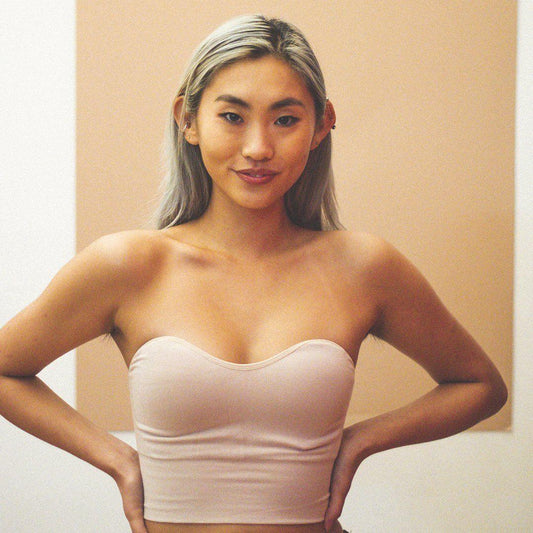
28D Bra Size — Tween Girl
Rib cage measurement: 28 inches (already even, no rounding needed). Band size: 28. Bust measurement: 32 inches. 32 minus 28 = 4-inch difference = D cup. She has a 28D bra size.
Recommendations include: Everyday Bra, Soft Day Bra with Back Closure, HUG Sports Bra w Lace, Lace Halter Bralette, Soft V Crop Bra, Backless Halter Bra Top, and Soft Cami Bra Top. She chose the Soft V Crop Bra and an Everyday Bra.
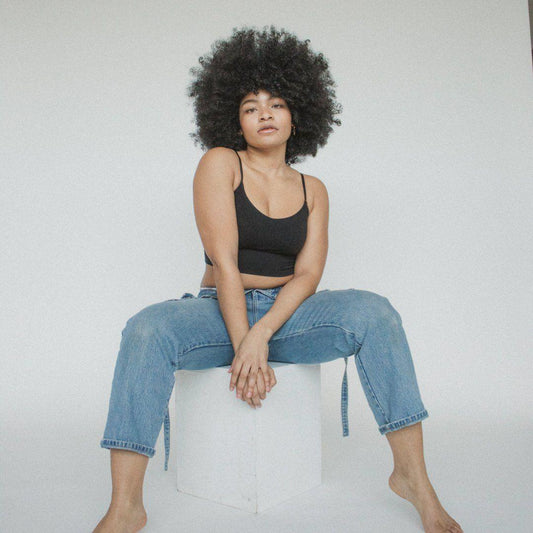
28DD/E Bra Size — Teen Girl
Rib cage measurement: 28 inches. Band size: 28. Bust measurement: 33 inches. 33 minus 28 = 5-inch difference = DD/E cup. She has a 28DD/E bra size.
Recommendations include: Everyday Bra, Soft Day Bra with Back Closure, Soft Cami Bra Top, Soft V Laceback Reversible Bralette, and Everyday Convertible Bra with J-Hook. She got the Everyday Convertible Bra with J-Hook.
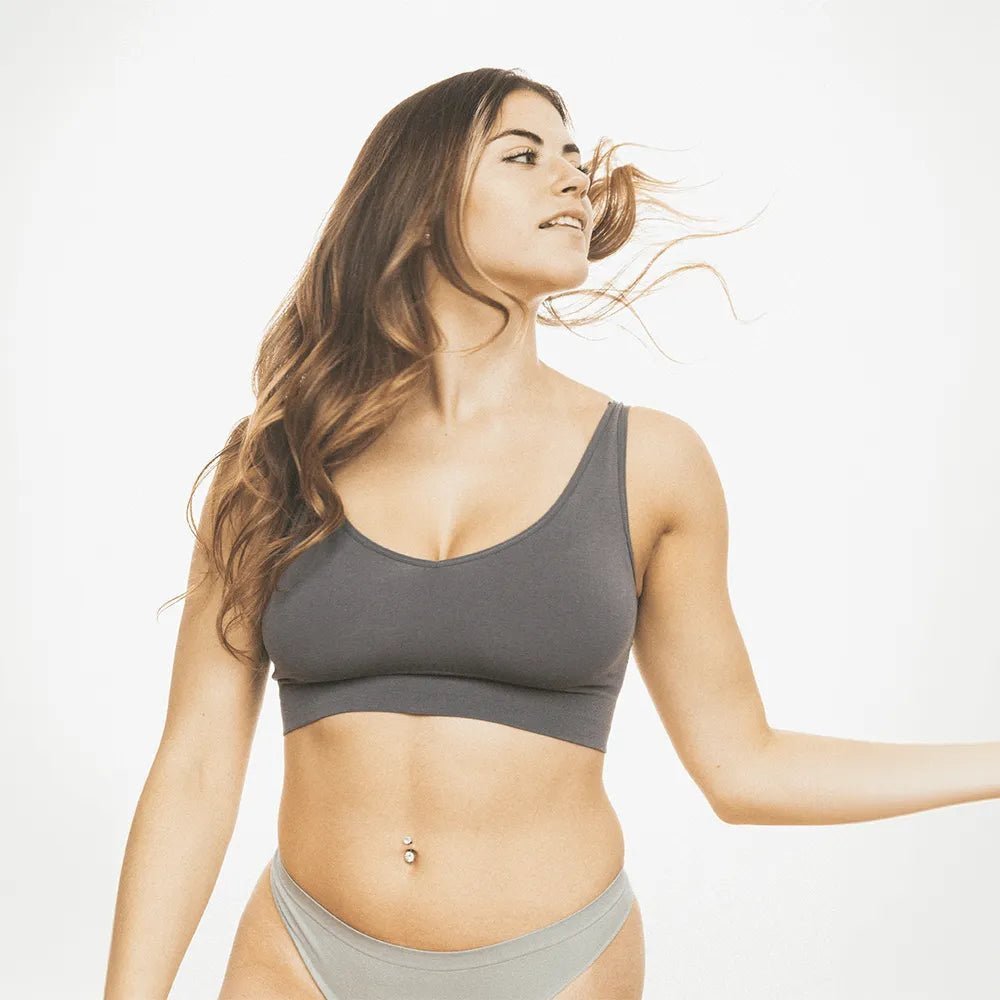
28DDD/F Bra Size — Teen Girl
Rib cage measurement: 28 inches. Band size: 28. Bust measurement: 34 inches. 34 minus 28 = 6-inch difference = DDD/F cup. She has a 28DDD/F bra size.
Recommendations include: Everyday Bra, Soft Day Bra with Back Closure, Soft Cami Bra Top, Soft V Laceback Reversible Bralette, Everyday Convertible Bra with J-Hook, Soft V Crop Bra, HUG Sports Bra w Lace, Lace Halter Bralette, and Backless Halter Bra Top. She chose the Soft Day Bra with Back Closure.
More Recommendations by Style
28D picks: Lace bralette — Soft V Laceback Reversible Bralette; Everyday bra — Everyday Bra; Cami bra top — Soft Cami Bra Top; Everyday bra — Soft Day Bra with Back Closure.
28DD/E picks: Everyday bra — Soft Day Bra with Back Closure; Crop bra — Soft V Crop Bra; Cami bra top — Everyday Longline Cami Bra Top; Convertible bra — Soft Crop Bralette / Soft Multiway Convertible Bra.
28DDD/F picks: Everyday bra — Soft Day Bra with Back Closure; Lace bralette — Soft V Laceback Reversible Bralette; Cami bra top — Everyday Longline Cami Bra Top; Everyday bra — Everyday Bra.
That's not the end of the list, explore teen bras, tween bralettes, and young adult bras for 28D, 28DD/E, or 28DDD/F sizes. BRABAR's collection includes halter bras, cotton bralettes, racerback bras, everyday bras, strapless bras, and sports bras, all built to grow with growing girls, since bodies are always changing no matter your age.
Frequently Asked Questions
Why would someone with a 28D be put in a 32 band instead?
Because most stores don't stock a 28 band, and because outdated measuring methods inflate the band regardless. Neither reason means her actual rib cage is 32 inches; it stays 28, whatever band she's sold.
Why does underwire specifically fail on a small band with a full cup?
Underwire is pre-curved to match one specific rib cage circumference. A wire built for a 32-inch band doesn't shrink to fit a genuinely 28-inch rib cage, so it sits away from the body, digs in, or twists rather than settling correctly.
Does a fuller cup mean I need a bigger band?
No. Band size measures the rib cage, not the bust. A 28-inch rib cage stays a 28 band regardless of whether the cup on top of it is an A or a DDD/F.
What is a 28D in actual measurements?
A 28-inch band and a 32-inch bust, a 4-inch difference. The band number and the bust number are two separate measurements, not one scaling the other.
Does every BRABAR style work for a small band with a full cup?
Yes. Every style is built band-first and wire-free with a flexible cup, so 28D, DD/E, and DDD/F are central proportions the line is built around, not an edge case.
If you can't find your size, start by getting properly measured. Use our Fit Guide and Bra Size Calculator to find your size, then explore the blog for recommendations based on your needs.
Was this helpful? Star BRABAR on Google to catch every fit guide first.