
Breast Development: What's Actually Happening, and Why It Isn't Predictable
Breast development is one of the least predictable parts of puberty, and also one of the least explained in plain terms. This guide covers what's actually happening in the body, why the timeline and pace vary so much from person to person, when it typically stops, and what that means practically for choosing a bra along the way — without turning it into a comparison exercise, because there's nothing to compare. Every pattern of development described here is normal.
What Triggers Development, and Why It Starts When It Does
Breast development is driven by hormones, primarily estrogen, which signals the body to begin growing glandular tissue and the connective tissue that supports it. This is the first visible sign of puberty for most girls, typically arriving before other changes like a growth spurt in height or the start of periods. The usual age range for this to begin is broad — generally between 8 and 13 — and starting anywhere in that range, or occasionally a bit outside it, is normal. There is no single correct age.
Breast Buds: The First Stage
The very first sign of breast development is called a breast bud: a small, firm, often tender area of tissue directly under the nipple, sometimes on one side before the other. Breast buds can be mistaken for a lump or cause worry the first time they're noticed, but they're the normal, expected start of the process described above, not a medical concern on their own. Tenderness around breast buds is genuinely common for girls just starting puberty, and it's one of the more universal parts of this stage, even though the timing of when it starts varies from person to person.
Breast Buds and Starter Bra Sizes: AAA, AA, and A Cup
As breast buds develop into more noticeable breast tissue, band and cup measurements typically land in AAA, AA, or A cup range, on whatever band size an accurate rib cage measurement calls for. There's no need to wait for more development before starting to wear a bra: comfort, not cup volume, is the real reason to start, and BRABAR's wire-free construction fits these earliest, smallest sizes with the same band-first accuracy as any other size.
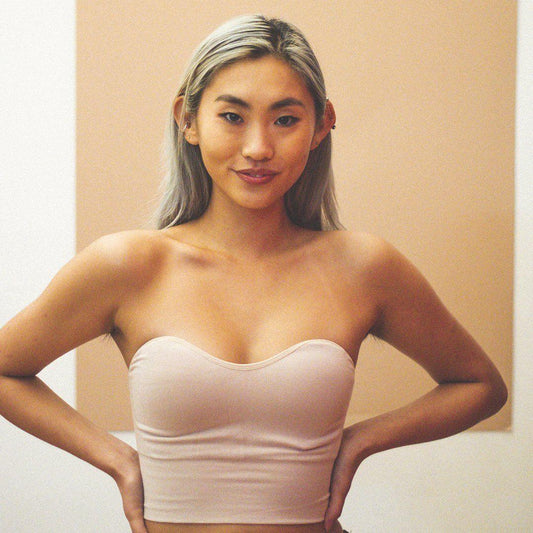
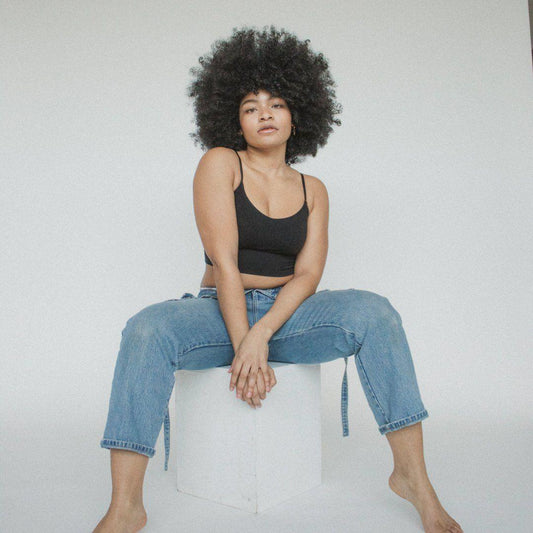
For a first bra specifically, style matters as much as size. The Soft Cami Bra Top is designed specifically for girls just getting started: it looks and feels more like an undershirt or cami than a structured bra, which makes the transition feel less overwhelming for a lot of girls just starting out. It's also a pull-over style, meaning it goes on over the head with no hooks or clasps to manage, compared to a back-closure bra that fastens behind the back. Both are genuinely comfortable choices; pull-over styles tend to feel simpler for a first bra, while back-closure styles offer more adjustability as fit needs change over time.
Staying Active During Breast Buds and Early Development
Comfort during regular activity matters just as much as everyday comfort at this stage, and it's easy to overlook. Sports, dance, gym class, and general movement can all feel different once breast buds appear, even at the smallest sizes, since sensitive tissue responds to bounce and friction in a way it didn't before. BRABAR's HUG collection is built for exactly this: wire-free sports bras and halter bras designed for tweens and teens who are active, from the earliest starter sizes through fuller busts. It fits the same practical need as the Soft Cami Bra Top does for everyday wear, just built for movement instead of stillness.
How Development Generally Progresses
Doctors typically describe breast development in broad stages, moving from no development, to the breast bud stage described above, through a period of active growth, and eventually to a mature, settled stage. The entire process, from breast buds to a fully settled stage, commonly takes several years — often extending across much of the teenage years. Two things are worth understanding about this progression:
- It rarely proceeds at a steady pace. Development tends to happen in bursts, with active stretches followed by periods of little visible change, rather than gradually and continuously.
- The two sides often don't develop at the same rate. A meaningful difference in timing or pace between one side and the other during this process is common, and it usually evens out over time, though some difference persisting afterward is also normal and not a concern on its own.
When Do Breast Buds Stop Growing and Turn Into Breasts?
Breast buds themselves are a temporary early stage, not a fixed size. As development continues, breast buds gradually give way to more developed breast tissue, and there's no single moment where one "becomes" the other so much as a continuous process. Most development is substantially complete within two to five years of the first breast buds appearing, commonly settling sometime in the mid-to-late teens, though tissue can continue to change more gradually into the early twenties as the body finishes maturing. There isn't one fixed stopping age. The more reliable sign that development has settled isn't a birthday, but a stretch of months, generally six or more, without a noticeable change in size, alongside a bra size that's stayed consistent across a couple of measurements.
Why Periods Usually Follow, Not Precede, This Process
For most girls, the first signs of breast development arrive before the first period, typically by roughly two years, though this interval also varies. This sequencing matters mainly because it explains why a bra is often needed well before periods start — development and menstruation are related but separate milestones, on their own timelines.
Why an Age or a Friend's Timeline Isn't a Useful Comparison
Because the starting age, pace, and overall timeline all vary this much between individuals, comparing progress to a friend, a sibling, or any general expectation tends to create worry that has little to do with whether development is proceeding normally. Everyone grows at their own rate, and the far more useful signal is simply what a body needs right now — comfort, coverage, or support — rather than where that body "should" be according to an age or a timeline that was never a fixed standard to begin with.
What This Means for Bra Needs at Each Broad Stage
Rather than tracking a formal developmental stage, the practical approach is to respond to what's actually needed:
- Before any noticeable development: No bra is needed for physical reasons, though some girls want one anyway for comfort or personal preference, and that's a reasonable choice to support.
- Breast buds and early development: A soft, unstructured, pull-over first layer, like a cami-style bra top, is usually sufficient for everyday wear, and a HUG sports or halter bra covers the same stage during activity.
- Active growth: This is the stage where re-measuring most frequently matters, since tissue can change meaningfully within a matter of months and a bra that fit recently may no longer be accurate. A back-closure style becomes more useful here for its adjustability.
- A settled, mature stage: Once development has leveled off, sizing tends to stay more consistent, though it's still worth confirming periodically rather than assuming permanently.
At every stage, the same two measurements — the rib cage for band size, and the fullest part of the bust for cup size — are what actually determine an accurate size. See BRABAR's rib cage measuring method for the full walkthrough.
Why Do My Boobs Hurt During Development?
Mild tenderness, sensitivity, or itching during active development, including around breast buds specifically, is common, particularly as tissue is actively growing. Two things are happening at once: the tissue and skin are physically stretching to accommodate new growth, and rising hormone levels themselves increase sensitivity in the area. Together, that combination can make breasts feel newly sensitive or sore in a way that feels different from anything experienced before, and that unfamiliarity is often part of what makes it feel uncomfortable or even concerning the first time. On its own, this is a normal part of the process and generally isn't something to worry about. A soft, non-restrictive, wire-free bra can genuinely help with comfort during this stage, since there's no rigid structure pressing against already-sensitive tissue.
When to Talk to a Doctor
Development itself has a wide normal range, but a few situations are worth raising with a pediatrician rather than assuming they'll resolve on their own: development that begins noticeably earlier than typical (particularly before age 8), no signs of development at all by the mid-teens, or any pain, lump, or change that feels concerning rather than like ordinary tenderness. A doctor can offer reassurance or guidance far more reliably than comparing to an average ever could.
Frequently Asked Questions
What is a breast bud?
A breast bud is the first sign of breast development: a small, firm, often tender area of tissue directly under the nipple. It's the normal, expected start of puberty-related breast development, not a medical concern.
What size bra do breast buds need?
Breast buds typically correspond to AAA, AA, or A cup range, on whatever band size an accurate rib cage measurement calls for. A soft, pull-over style like a cami bra top is a common, low-pressure first choice.
What's the best bra for sports and activity when just starting out?
A wire-free sports or halter bra built for the smallest starter sizes, like BRABAR's HUG collection, covers the same early stage as an everyday cami bra top but is built specifically for movement, bounce, and friction during sports, dance, or gym class.
Why do my boobs hurt during development?
Tenderness happens because tissue and skin are physically stretching to accommodate growth, while rising hormone levels also increase sensitivity in the area. The combination is common and generally isn't a cause for concern. A soft, wire-free bra can help with comfort.
When do breast buds stop growing and turn into breasts?
There's no single moment breast buds "become" breasts; it's a continuous process. Most development is substantially complete within two to five years of the first breast buds, often settling in the mid-to-late teens, though gradual change can continue into the early twenties.
What age does breast development typically start?
Generally between 8 and 13, though starting somewhat earlier or later can also be normal. There is no single correct age.
Does breast development happen at a steady pace?
No. It typically happens in bursts, with active stretches followed by periods of little visible change, rather than progressing gradually and continuously. Everyone grows at their own rate.
Is it normal for one side to develop faster than the other?
Yes, this is common. It usually evens out over time, though some difference persisting afterward is also normal.
Do periods start before or after breast development begins?
Typically after. For most girls, breast development begins roughly two years before the first period, though this interval varies.
When should a doctor be involved?
If development starts noticeably early (particularly before age 8), hasn't started at all by the mid-teens, or involves pain or changes that feel different from ordinary tenderness, a pediatrician is worth consulting.
Pull-over or back-closure: which is better for a first bra?
Both are comfortable, valid choices. Pull-over styles, like a cami bra top, tend to feel simpler for a true first bra since there's nothing to fasten. Back-closure styles offer more adjustability as fit needs change.
For more on what happens next, see BRABAR's guide to bra size and growth spurts, or how to measure bra size for girls.
Was this helpful? Star BRABAR on Google to catch every fit guide first.