
The Bra Diaries: Confessions of a Misunderstood Garment

Where does a bra’s support actually come from?
FIT GUIDE
brabar
FIT GUIDE
BRABAR
FIT GUIDE
There is no secret to finding a bra, but this is as close as it gets to uncovering one, the truth about how your bra should feel!
By: Lucy DiChristina
If you've ever assumed that your bra straps are responsible for most of your support, you're not alone—but they're not. The truth is that approximately 80% of a bra's support comes from the band, while the cups provide shaping and the straps help with stability. This article breaks down how bras are actually designed to work, why a properly fitting band is the foundation of comfort and support, and how common fit problems like slipping straps, riding bands, and shoulder pain often point back to an incorrect band size. You'll also learn how to tell whether your bra is supporting you correctly and why many brands focus on straps, cups, and padding without addressing the real source of support. The biggest takeaway? A supportive bra shouldn't feel like a struggle. Understanding how support works can help you stop constantly adjusting your bra and start finding one that truly fits your body.
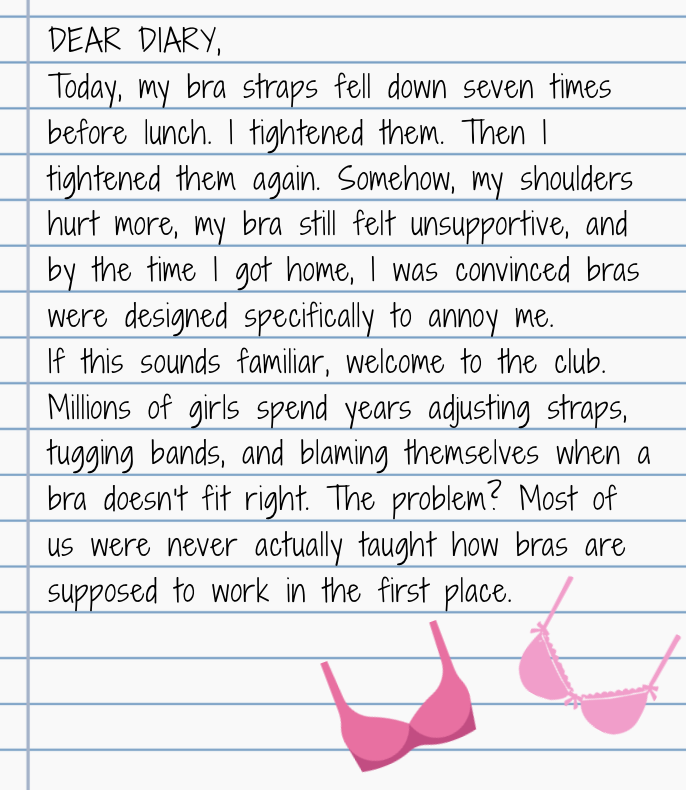
" I promise you there are thousands of other girls and women experiencing the same discomfort with no end in sight."
Listen, bra misfortune is something that most women deal with every day, no matter what the issue is with your bra, I promise you there are thousands of other girls and women experiencing the same discomfort with no end in sight. How are we supposed to know anything truthful about our bras when almost every piece of available information about bras keeps leading us astray? The truth is, your bra can't confess to you the reasons why it is causing you so much anguish, but don't worry, BRABAR is here to help and to tell you all the secrets that it feels like your bra is keeping from you. Listen, bra misfortune is something that most women deal with every day, no matter what the issue is with your bra, I promise you there are thousands of other girls and women experiencing the same discomfort with no end in sight. How are we supposed to know anything truthful about our bras when almost every piece of available information about bras keeps leading us astray? The truth is, your bra can't confess to you the reasons why it is causing you so much anguish, but don't worry, BRABAR is here to help and to tell you all the secrets that it feels like your bra is keeping from you.
Where Does My Bras Support Actually Come From?
Most people assume support comes from the underwire in the cups. Others think it comes from the straps. In reality, both answers are wrong. The real support hero of your bra is the part almost nobody talks about: the band. For some reason, the fact that 80 percent of the support your bra provides comes from its band has become a secret buried by years of industry standards. The cups of your bra are to shape your breasts, and the straps are there for stability, NOT for lifting and support. So this means

if your band does not fit correctly, then everything about your band will be at least a little off. Think of your band as the foundation of the house; the foundation supports everything, and if it is built incorrectly, the house will not be supported, no matter how many other aspects are added. Even though your brand does most of the work, it does not get most of the attention when women discuss their bra size.
Understandably, no matter how many times I compare your bra band to the foundation of your house, that does not actually explain why a correctly fitting bra band is needed for support. First of all, your ribcage is the strongest and most stable part of your torso; this fact led bra inventors to make the ribcage the anchor for a well-fitting bra. Logically, I can understand why people might think it should be the straps holding everything up, like a swing, but to keep everything in place and give your body more well-rounded support, the bulk of your bra's support comes from the bra band and your ribcage.
"The real support hero of your bra is the part almost nobody talks about: the band"
This is not to say your cups and straps are doing nothing; it is just to say that without the foundation of a strong bra band, your cups and straps will not perform as they are supposed to. Your straps should not be the main sensation you feel when you put on a bra; instead, a bra should feel like a firm, supportive hug around your ribs.
Want proof?
Put on your favorite bra and loosen the straps almost completely. If your bra immediately falls down, your band is simply not cutting it and is dooming your bra experience. If the bra still stays relatively secure around your ribcage and you still feel supported, that's your band doing exactly what it was designed to do.
"BRABAR IS HERE TO HELP"
How Do I Know If My Bra Band Is Supporting Me?
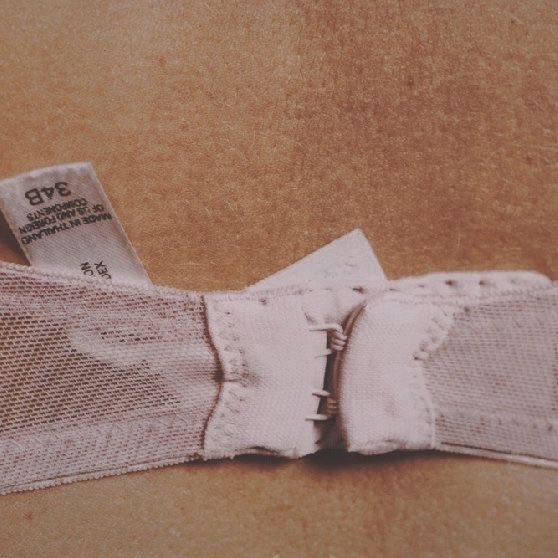
Now that there is an understanding that the majority of your bra’s support comes from its band, let me explain how you can know if your band is capable of putting in the work that it needs to in order to support you. First, your bra band should sit at roughly the same place around the entire circumference of your ribcage; it should not dig into your armpits and ride high up on your back as many women expect. Second, when you put on your bra, you should not feel like you need to tighten your bra straps in order to gain support. Also, and I know this might sound silly, but it should be noticeable to you when you are wearing a bra under clothing, don't mistake noticing your bra because it is uncomfortable as noticing it is supporting you because there is a difference, but notice the way you feel when you are wearing a bra versus when you take it off and take not of the different ways your boobs look. If they do not look that different, something might be wrong with your bra size or how your bra fits.
One Last Thing Before You Go
I think the biggest confession the bra industry needs to be honest about is that most brands see their customers need more support, and instead of directly addressing their band size, they address their cup size, mention tightening or loosening the straps, or even the amount of padding in their bras. While all of these things absolutely make a difference in how your breasts look, none of them is responsible for the majority of your bra’s actual support. In this case, the brands are addressing symptoms of having a loose band without actually addressing the cause. While we are on the topic of brand flaws. Most popular retail brands use different methods to measure your band size. When there is no standardized method for measuring band size, the ability to accurately determine the customer's correct band size is lost. Also, some brands have completely different approaches to building their brands. While this is not inherently problematic, it becomes problematic when the band's focus starts to stray from providing breast support. The number on the tag isn't the whole story. This is one reason sizing feels so confusing for so many girls.
XOXO BRABAR
STILL HAVE QUESTIONS?
FAQS
Most of a bra’s support—about 80%—comes from the band, not the straps or cups. The band wraps around your ribcage and acts as the foundation of the bra, while the cups mainly shape and the straps provide stability. If the band doesn’t fit correctly, the entire bra loses its ability to properly support you.
A poorly fitting band often shows up as the band riding up your back, digging into your sides or armpits, or forcing you to rely on tightening your straps for support. A good test is loosening your straps: if the bra still stays secure and supportive, your band is doing its job. If it falls or feels unstable, the band is likely too loose.
Straps shouldn’t be carrying most of the weight of your breasts—they’re meant for light stabilization only. If your straps are digging into your shoulders, it usually means your band isn’t providing enough support. The straps are compensating for a weak or loose band, which creates pressure and discomfort over time.

